
Health education for the elderly
The core of health education for the elderly has never been to instill standardized health principles into the elderly and force them to give up all "unhealthy" living habits. Rather, it should be in line with the cognitive characteristics and life scenarios of the elderly group, and transform professional knowledge into practical life choices. There is no unified plan that suits everyone - this is the most practical conclusion we have accumulated after four years of providing elderly health services in the community.
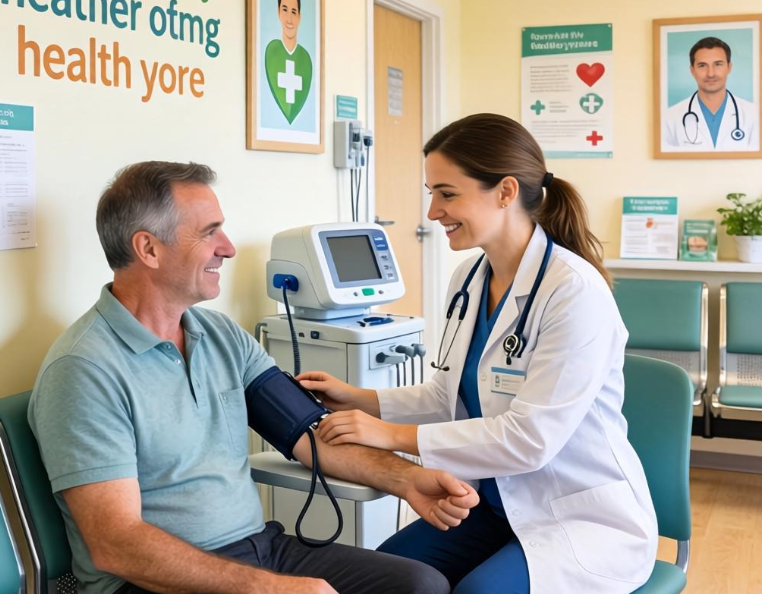
Speaking of which, I came across something like this when I was working at the community health service center last week: 72-year-old Aunt Zhang came to ask with three pages of crumpled handwritten notes in her hands. The edges of the paper were still imprinted with reading glasses, and there were a lot of underlines on them. She said they were followed by a short video of a "daily must-do list": eat 8 kinds of nuts every day, walk 10,000 steps, and drink three cups of warm salt water on an empty stomach. As a result, I only persisted for half a month. My knees hurt so much that I couldn't go downstairs, and I still had mouth ulcers every day. I looked through the health manual issued to the elderly by the community. The words are smaller than ants. The whole article is full of words such as "Those with dyslipidemia need to control their fat intake" and "The recommended daily walking time is 30-60 minutes." No wonder Aunt Zhang would rather text a short video than read the manual.
Interestingly, there have always been two completely different voices in the industry regarding health education for the elderly. One group is the "normative group", which believes that the content of the output of clinical guidelines must be strictly adhered to. The indicators must be accurate and contraindications must be listed, and there must be no "fuzzy space". Many community health lectures have been based on this idea. The PPTs are all numerical values. Fasting blood sugar should be controlled at 3.9-6.1mmol/L, and the daily salt intake should not exceed 5 grams. The lectures are meticulous, but the old man turns around and forgets after listening - who knows how to use a scale to weigh salt when cooking? The other school is the "life-oriented school", which advocates integrating all professional knowledge into the daily life of the elderly. 5 grams of salt is the amount of a flat beer bottle cap. You don't have to walk 10,000 steps, just a slight fever in the back and talking without breathing. A community in Hangzhou piloted this idea last year, and the elderly's compliance with chronic disease management increased by 32%. The data is real.
I tried it before when I helped the community to revise the health promotion leaflet. I changed "Patients with hyperlipidemia need to control the intake of saturated fatty acids" to "When stewing pork belly, put less rock sugar and dark soy sauce. Just eat it once or twice a week to satisfy your cravings. Two or three pieces each time is enough." "Go again in 3 seconds." The old man who came to measure his blood lipids during the period after the delivery saw that the excess rate actually dropped by nearly 10%. There was also an 81-year-old uncle Li who specially came to greet me with half a piece of sauced elbow he just bought: "Xiao Zhou, I eat it once a week, two pieces each time. I can satisfy my cravings and don't have to worry about high blood lipids. It's much better than before."
There is another controversial point: Nowadays, everyone is clamoring to crack down on fake health care for the elderly. Should all health care habits that are not evidence-based have to be eliminated? Many geriatricians in public tertiary hospitals I have contacted feel that as long as they do not take "magic medicine" or believe in rumors such as "mung beans cure cancer", they will be harmful to the body, such as "drinking a cup of warm water every morning to nourish the stomach" and "wearing a hat in winter to prevent head wind". This kind of habit has no clear evidence-based support, but it is not harmful. There is no need to argue with the elderly about right and wrong. The original purpose is to make people feel at ease. If you insist on calling it pseudoscience, it will easily make the elderly resist formal health knowledge, and the gain outweighs the loss. Of course, the content related to safety cannot be ambiguous at all, such as how to take nitroglycerin intrabuccally and how to use the Heimlich maneuver if a foreign body is stuck. Our community has printed palm-sized waterproof cards and posted them on the refrigerator doors of every elderly family. Last year, an old man actually choked on a rice cake. The old lady followed the steps on the card and took a photo of the foreign body, which saved her a lot of trouble.
The longer I work in this field, the more I feel that we should not make health education for the elderly a "class", and do not treat the elderly as "poor students" who need to be corrected. You can print health tips on grocery carts and fans for square dancing, and hold a "healthy cooking competition" to let the elderly figure out how to make dishes with less salt and sugar that are still delicious. This is much more useful than sitting in a conference room and reading ten PPT sessions. After all, our ultimate goal in doing this is never to make all the elderly live a "template" that strictly meets health indicators. It is just to make them feel less sick, more practical, and live their own lives comfortably.
Disclaimer:
1. This article is sourced from the Internet. All content represents the author's personal views only and does not reflect the stance of this website. The author shall be solely responsible for the content.
2. Part of the content on this website is compiled from the Internet. This website shall not be liable for any civil disputes, administrative penalties, or other losses arising from improper reprinting or citation.
3. If there is any infringing content or inappropriate material, please contact us to remove it immediately. Contact us at:
