
Essay on the difference and connection between parenting and children's health
Parenting is a collection of all active practices carried out by caregivers around children's growth. Children's health is the quantifiable objective state of children's physical and mental development. There are essential differences in the core attributes, evaluation systems, and implementation logics of the two. At the same time, there is a strong correlation between the two. Parenting that is divorced from children's health goals is an ineffective practice, and children's health without the support of scientific parenting is difficult to maintain in the long term. Any cognition that opposes or directly equates the two will lead to pitfalls in actual parenting.
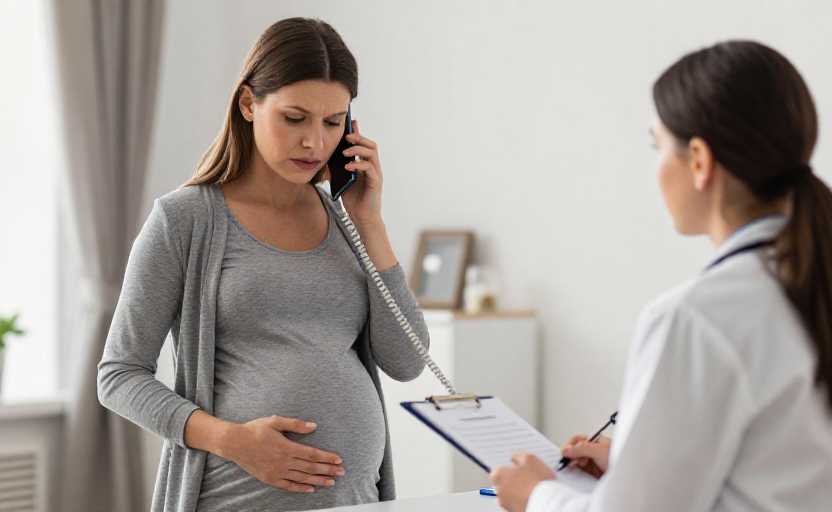
As a practitioner with 7 years of clinical experience in pediatric health care and 4 years of parenting science education, I have seen too many parents who confuse the relationship between the two. Last month, I met a grandma at a community free clinic. She dragged me and asked me for 20 minutes. She said that her daughter-in-law reads picture books to her baby every day and does early education, saying that this is scientific parenting. As a result, the baby has 100 degrees of myopia when she was just 2 years old. She doesn’t eat well and is as thin as a bean sprout. She thinks that her daughter-in-law is messing around. “As long as the baby can eat, sleep and not get sick, how can she not raise the baby?” You see, this is a typical example of narrowing parenting to "elite parenting routines" and narrowing children's health to "as long as they are not sick". In fact, neither side understands the boundary between the two.
Let’s talk about the most easily confused differences first. Many people think that "good parenting = healthy children", which is actually not the same thing at all. The core of parenting is "people's active choices." From the temperature of the water to prepare milk powder, to what pattern of socks to choose for the baby, to how to deal with the baby's first lie, or whether to enroll the baby in the Mathematical Olympiad class, all choices made by caregivers that are related to the growth of the child fall under the category of parenting. Its evaluation system is extremely diverse, and in many cases there is even no standard answer: Which do you think is right, free-range happy education or refined chicken babies? The field of developmental psychology has been arguing for decades, but there is no unified conclusion. Different families have different resources, needs, and parenting goals, so the choices naturally vary. But children's health is different. It is "the objective state of the child" and has clear medical and developmental hard standards: the height and weight percentile of a 6-year-old child, the score of the Wechsler Intelligence Scale for Children, the developmental milestones of social skills, and the detection values of allergens. These are all quantifiable and have unified reference values. Just because you think "my baby is just growing late" will not change the fact of growth retardation, nor will it deny the diagnosis of attention deficit just because you think "the baby is just lively and active."
Academic circles have actually been arguing about the weight of the two for many years. The behaviorist parenting school once dominated the mainstream, believing that as long as children's diet, daily routine, and learning content are accurately planned through standardized behavioral intervention, "healthy" parenting results can be achieved. In the last century, the military parenting method of "arranging schedules by minutes" was even popular in Europe and the United States. ; The humanistic school is completely opposite. It believes that as long as children are given enough love and freedom, children will naturally grow into a healthy state, and parenting only needs to be a "spectator". Both of these views have a large number of followers, but in real parenting scenarios, problems of acclimatization will arise: families that raise children according to a schedule are prone to problems with children's emotional depression and deviation in psychological development. I once treated a 4-year-old child who dared not look up when talking. When I asked, I found out that the family has strictly enforced the schedule since he was 1 year old. He had to stop crying when he couldn't be hugged. Over time, he developed obvious social withdrawal. ; Families that are completely free-range are prone to miss the intervention window period for developmental abnormalities. Last year, a mother brought her 6-year-old baby to have her height checked, and she was 10 centimeters shorter than her peers. She said that she used to think that her baby was healthy if she could run and jump, but she had never received any health care. Now it has been found that she is suffering from growth hormone deficiency, and she has missed the best intervention period. It is a pity.
But if you want to say that these two have nothing to do with each other, then you are stepping into a big pitfall in raising a child. I treated a 5-year-old asthmatic child last year. The elders in the family always felt that the child was weak. He was not allowed to run or jump. He was not even allowed to leave the door in the winter, and he was always stuffed with fish and meat for nutrition. As a result, the child not only had more frequent asthma attacks, but also suffered from social withdrawal. He cried whenever he saw strangers, and his BMI was 2 standard deviations above the limit. Do you think this is a parenting issue or a health issue? In fact, they are all tied together: wrong parenting behaviors directly lead to the deterioration of health status, and poor health status in turn makes parenting more difficult, forming a vicious circle. My advice to parents at that time was not to prescribe new medicines at all. First, change the "no going out" rule. Walk downstairs with your baby for 20 minutes every day, change the diet to a 1:1 mix of meat and vegetables, and don't chase after feeding. Three months later, the parents came for a follow-up visit and said that the number of asthma attacks had been reduced by half. Now he would greet neighbors when he saw her, and his weight had slowly returned to the normal range.
In fact, many times the boundary between the two is blurred. For example, if you run with your baby for half an hour every day, would you say this is parenting or health management? It is, it is all, it doesn’t need to be so clearly distinguished, as long as it is useful. I once met a father who said that he had enrolled his child in three interest classes. The child had been complaining of headaches recently. After checking, there were no organic problems. He asked me if I had failed in parenting. I told him, first reduce the number of interest classes to one, take your children to the park to play football for half an hour two nights a week, and then give it a try. A month later, he came to me and said that his headache was gone. Now he looks forward to playing football every day, and the relationship between father and son has improved a lot. You see, this is the advantage of connecting the two. You don't have to worry about "whether I meet the standards of scientific parenting." It's better to first check whether the baby is comfortable and healthy, and then adjust the parenting method.
I often tell parents who come for consultations that there is no need to memorize those parenting knowledge points, and there is no need to worry about the height and weight of the child every day. You only need to remember a simple judgment standard: Have the parenting behaviors you are doing now made the child's condition better? If your child eats well, sleeps soundly, and is willing to play with children when going out, your childcare is still up to standard even if you have not enrolled your child in early childhood education or provided various complementary foods. ; On the other hand, even if you have met all the "scientific parenting" standards and your child is sick every day and has a bad mood, then you must have done something wrong and need to make adjustments quickly.
After all, parenting is never an exam that pursues perfect scores, and children's health is not a fixed score line. Both of them change dynamically with the growth of children. What parents have to do is never to stick to standards, but to slowly find a rhythm that suits both of you as your children grow up. That's enough. After all, the ultimate goal of raising a child is never to raise a "perfect child" that meets all standards, but to raise an ordinary person who is healthy, happy, and able to live a good life on his own, right?
Disclaimer:
1. This article is sourced from the Internet. All content represents the author's personal views only and does not reflect the stance of this website. The author shall be solely responsible for the content.
2. Part of the content on this website is compiled from the Internet. This website shall not be liable for any civil disputes, administrative penalties, or other losses arising from improper reprinting or citation.
3. If there is any infringing content or inappropriate material, please contact us to remove it immediately. Contact us at:
